 Number 204 - May 2000 |
| The Stand-Up Desk | ||
| by Guenther Schoti, Fallbrook PC Users Group | ||
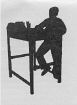 Stand-up desks are used by a good number of
professionals for a couple of reasons. Many, of course, have back
problems and simply cannot endure the stress that sitting at a desk
sometimes creates. Even the best-designed ergonomic chairs do not
provide enough comfort for them. People who use this type of worktable
say that they simply feel more alert and more productive working and
thinking on their feet.
Stand-up desks are used by a good number of
professionals for a couple of reasons. Many, of course, have back
problems and simply cannot endure the stress that sitting at a desk
sometimes creates. Even the best-designed ergonomic chairs do not
provide enough comfort for them. People who use this type of worktable
say that they simply feel more alert and more productive working and
thinking on their feet.
An East coast company uses the Internet effectively as a selling platform for their products. Their desks, particularly preferred by the armed services, come in specific sizes to meet a person's height. In this respect the company works with a simple formula. Someone 5' 10" tall should have a desk with a front height of about 46"; a 5' 9" person should have a front height of about 45 1/2"; 5' 8", 45" and so on. Good advice is to simulate the recommended height at a makeshift work-station and see how it feels. If it seems a bit on the high side, chances are you'll get used to it, especially if you make good use of that foot rest; it will take a lot of strain off your lower back. The key here is not to slouch over too much, that is to stand erect. The company is extremely proud of their craftsmanship but realizes that there is nothing sacred about their particular design. If you have worked with another cabinet maker, no doubt he or she can build you a stand-up desk that also will be sufficient. In that regard, they would like to share with you two simple pieces of advice: build the desk to an appropriate height and be certain to include a footrest, which some designers unfortunately do not include. A study of the backs of 31,200 Boeing Company employees several years ago documents that sitting puts 40 to 80 percent more stress on the back than standing; this research by the Spine Resource Clinic at the University of Washington confirmed what many people don't realize. Of course, stand-up desks have been around for a long time, and some pretty famous people have used them. Sir Winston Churchill, Ernest Hemingway, John Dos Passos, Virginia Woolf, and even Thomas Jefferson worked at these unique desks. |
In recent years demand
for both conventional and stand-up desks that accommodate computers has
also increased quite a bit. The company also produces some items for
that particular market.
The workshop is located in Alexandria, Virginia, part of a cabinetmaker's cooperative. For more information and a free brochure contact: The Stand-Up Desk Company PHONE: (301)657-3630 FAX: (703)519-0635 e-mail: standup@erols.com
|
|
|
Number 204 - May 2000
|


|
|